Tide Basics
What Is an Incoming Tide? A Simple Guide Before You Go
An incoming tide means the water is rising toward high tide. That simple detail can change your plan before you even reach the coast.

An incoming tide means the water is rising
An incoming tide means the water level is rising toward the next high tide. You may also hear it called a rising tide or flood tide.
It does not mean the water is high already. It means the water is getting higher. If low tide was at 8:00 a.m. and high tide is at 2:00 p.m., the tide is incoming during the hours in between.
That direction can be more useful than a tide number by itself. It tells you where the water is headed while you are fishing, surfing, launching, walking, or setting up at the beach.
Incoming tide is not the same as high tide
Incoming tide is the climb. High tide is the top of the climb, when water reaches its highest predicted point before beginning to fall again.
The same distinction works in reverse. Outgoing tide means water is falling toward low tide. Low tide is the low point before it starts to rise again.
Once you know the direction, a tide chart becomes a planning tool. The shore, depth, and access you see when you arrive may not look the same an hour or two later.
What rising water can change
As the tide comes in, water can cover beach, flats, rocks, marsh edges, sandbars, ramps, and shallow channels that were more exposed earlier in the day.
At a familiar spot, that may be exactly the window you want. At an unfamiliar one, it is a good reason to check the next high tide before you park, launch, or walk too far from an easy exit.
- A beach can get narrower as dry sand disappears.
- A shallow flat, channel, or ramp can gain water.
- Water movement can change around creeks, inlets, cuts, bridges, and passes.
- A surf break can change as more water covers the bar or reef.
What incoming tide means for fishing and surfing
For fishing, rising water can give bait and fish access to flats, marsh edges, creek mouths, and shoreline cover. That does not make incoming tide a guaranteed bite. Weather, season, water clarity, regulations, and local knowledge still matter.
For surfing, an incoming tide means more water will be moving over the break. At one spot, that can soften a wave that was too shallow. At another, it can make the wave slower or less defined. Local tide windows matter more than generic rules.
If you are new to a break or fishing spot, treat the tide direction as a useful clue, then watch the water and learn how that place behaves.


What incoming tide means for boaters and beachgoers
For boaters, rising water can mean more depth over a shallow route, bar, or ramp. It does not replace charts, markers, current predictions, weather, or local knowledge.
For beach walks, it can mean less dry sand and fewer easy routes around rocks or headlands. On an unfamiliar shore, give yourself room to turn around and follow local signs, lifeguard guidance, weather advisories, and beach rules.
Tide timing helps with planning, but it is not a safety forecast.

Tide and current are related, but not the same
A tide is the vertical rise and fall of water. A current is the horizontal movement of water. When water rises, it can create what is called a flood current, especially in bays, estuaries, and other confined coastal areas.
An incoming tide does not tell you the exact speed or direction of every current at every location. Local geography can change current timing and strength, especially around narrow inlets, bridge openings, harbor entrances, and winding creeks.
If current is important to your plan, such as boating through an inlet, paddling, diving, or crossing a channel, check dedicated current predictions and local guidance as well as tide timing.
How to tell if the tide is coming in
The simplest method is to look at a tide chart or app that shows both the current direction and the next turning point.
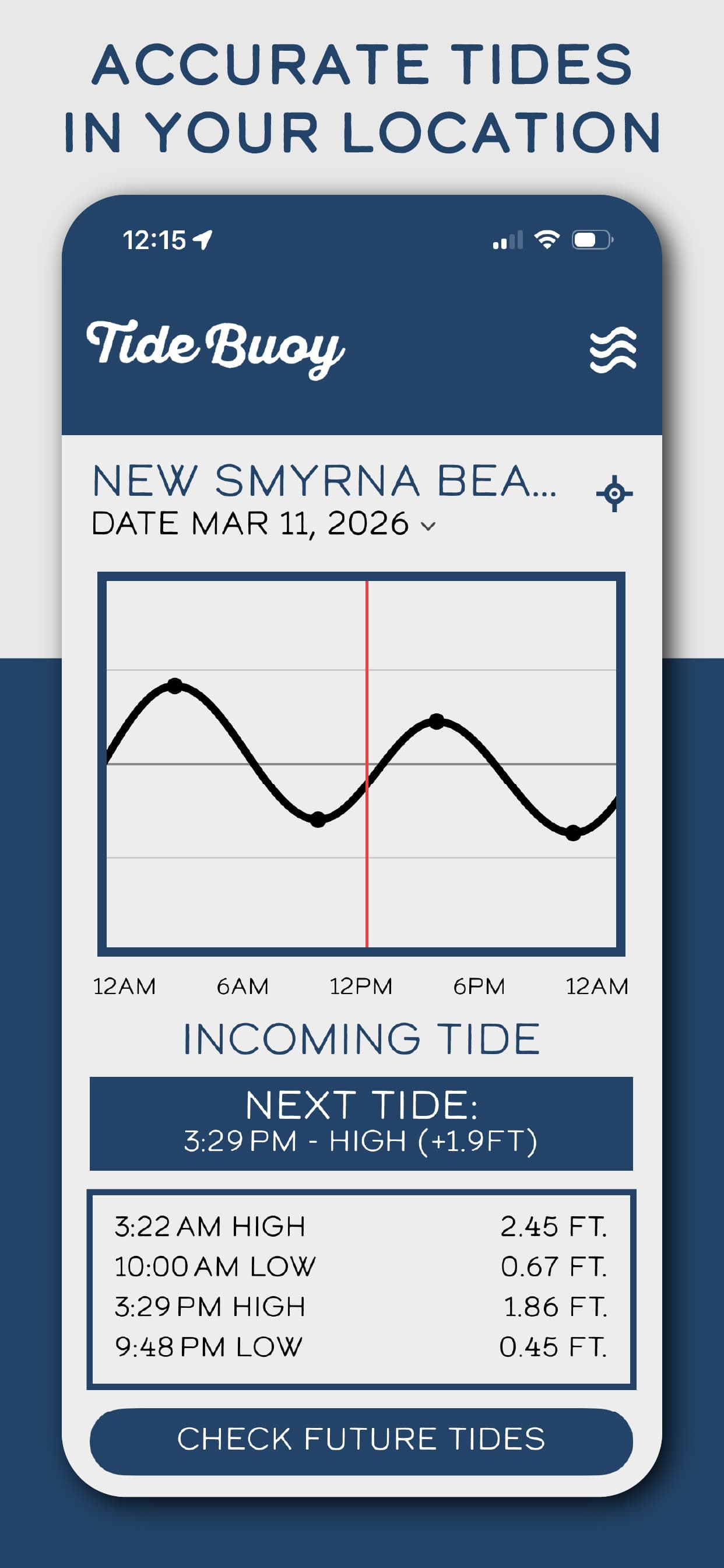
In Tide Buoy, check the current tide, whether the tide is incoming or outgoing, the next high tide, the next low tide, and the daily curve for your selected location.
If the tide is incoming, the level is rising toward the next high tide. Then translate that into your plan: more water over the bar, more room at the ramp, or a shoreline that will be smaller when you walk back.
Common questions about incoming tide
Is incoming tide the same as high tide? No. Incoming tide is the period when water is rising. High tide is the peak before the water starts to fall.
How long does an incoming tide last? It depends on the local tide cycle and the day’s predictions. Check the time from the last low tide to the next high tide for your location.
Is incoming tide safer than outgoing tide? Neither direction is automatically safer. Conditions depend on the location, weather, waves, current, route, equipment, and your experience. Tide direction is useful planning information, not a safety clearance.
Check the trend before you go
An incoming tide means the water is rising. Once you know that, you can make a better call about the next few hours at your spot.
Check the current tide, tide direction, and next high or low tide in Tide Buoy before you go.
Live tide charts
Read here. Plan in the app.
Live tide charts are available in the Tide Buoy iOS app. Web tide charts are coming soon.